

O‘zbek xalqining atoqli farzandi – dilbar shoir, dramaturg, yirik olim va tanqidchi Hamid Olimjon o‘zidan o‘lmas meros qoldirgan. U o‘zbek she’riyatida jo‘shqin lirizmga asoslangan she’riyat maktabini yaratgan shoir.
Iste’dodli shoir, dramaturg, tarjimon, adabiyotshunos va folklorshunos olim, davlat va jamoat arbobi Hamid Olimjon 1909-yil 12-dekabrda Jizzax shahrida dunyoga keldi. Narimonov nomidagi boshlang‘ich maktabni tugatgach, Samarqand pedagogika bilim yurtida (1923-1926), O‘zbek Pedakademiyasida (1926-1931) o‘qidi.
Hamid Olimjon talabalik yillaridayoq she’r yozdi. Uning asarlari 1926-yildan «Zarafshon» gazetasida chiqa boshladi. 1927-yilda shoir mazkur ro‘znoma muharririyatiga ishga o‘tdi. Hamid Olimjonning «Ko‘klam» nomli ilk she’riy to‘plami 1929-yilda bosilib chiqdi. Shundan so‘ng «Olov sochlar» (1931), «O‘lim yovga» (1932), «Poyga» (1932) kabi she’riy to‘plamlari nashr etildi.
O‘zbekiston Fanlar akademiyasining muxbir a’zosi (1943) Hamid Olimjon o‘zbek adabiyotining dolzarb masalalari bo‘yicha qator ilmiy-tanqidiy asarlar yaratdi. U A.Pushkin, L.Tolstoy, M.Gorkiy, V.Mayakovskiy, A.Serafimovich, T.Shevchenko, M.Lermontov, N.Ostrovskiy, A.Korneychuk asarlarini tarjima qildi va ular haqida maqolalar yozdi.
O‘zbek xalq og‘zaki ijodining ajoyib durdona asari «Alpomish» dostoni birinchi marta Hamid Olimjon tomonidan nashrga tayyorlanib, so‘z boshi bilan (1938) chop etildi. U Alisher Navoiyning 500-yilligini o‘tkazish yubileyi komitetining a’zosi sifatida ulug‘ shoir hayoti va ijodi yuzasidan ilmiy-tadqiqot ishlarini olib bordi. 1939-yildan to 1944-yilda avtomobil halokatiga uchrab, dunyodan ko‘z yumganiga qadar O‘zbekiston Yozuvchilari uyushmasiga rahbarlik qildi.
Shoir o‘zining «Daryo kechasi» (1936), «Chirchiq sohillarida» (1937), «O‘lka» (1939), «Baxt» (1940) to‘plamlari, «Ikki qizning hikoyasi» (1935-1937), «Oygul bilan Baxtiyor» (1937), «Zaynab va Omon» (1938), «Semurg‘» (1939) dostonlari bilan o‘z davrining ilg‘or g‘oyalarini tarannum etdi.
Ikkinchi jahon urushining olovli yillarida uning «Muqanna» nomli she’riy dramasi yaratildiki, u hanuzgacha dramaturgiyamizning gultoji bo‘lib kelayotir. Iste’dodli shoir Hamid Olimjonning ko‘pchilik asarlari qardosh xalqlar va xorijiy xalqlar tillariga tarjima qilingan.
Xurshid DAVRON kutubxonasi.
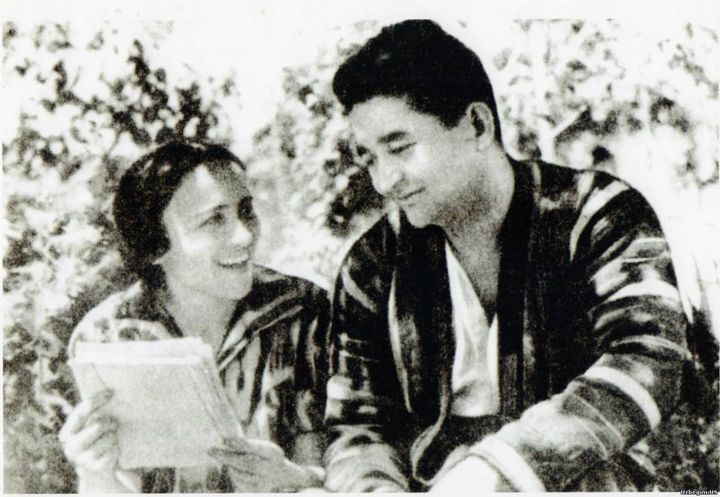
ENG GULLAGAN YOSHLIK CHOG‘IMDA…
Eng gullagan yoshlik chog‘imda, Sen ochilding ko‘ngil bog‘imda.
Shunda ko‘rdi ko‘zim bahorni, Shunda qalbim tanidi yorni.
Qushlar sayrar jonimga payvast, Men sevgining bo‘yi bilan mast.
Kuni bilan dalada qoldim, Lolazorlar ichra yo‘qoldim.
Quchoq-quchoq gullar terganim Va keltirib senga berganim
Kechagiday hamon esimda, Har soniya, har on esimda.
Shundan beri tilimda oting, Shundan beri dilimda oting.
Eng gullagan yoshlik chog‘imda, Sen ochilding ko‘ngil bog‘imda.
(1937-yil)